February 20. 2026
By Noreen Farrell, Executive Director
Recently, a supporter asked me why we don’t talk about white women.
I took a breath. Because here’s what I want every person in this country to understand during Black History Month and beyond: Black women have been the backbone of our democracy, and right now, they’re under direct attack.
Black women turned out at the polls in historic rates in 2020 and 2022, delivering crucial victories that protected voting rights, healthcare access, and democratic institutions for our country. They warned us about threats to our freedoms. They organized, they mobilized, they showed up—again and again.
And what has happened since January 2025?
Black women are losing jobs at an unprecedented pace. DEI programs that created pathways for Black (and other) women in federal and private employment—dismantled. The White House Gender Policy Council, which addressed maternal mortality rates three times higher for Black mothers—eliminated. Civil rights enforcement at agencies that investigated discrimination—gutted. Protections for Black women in the workplace, in healthcare settings, in our schools—under siege.
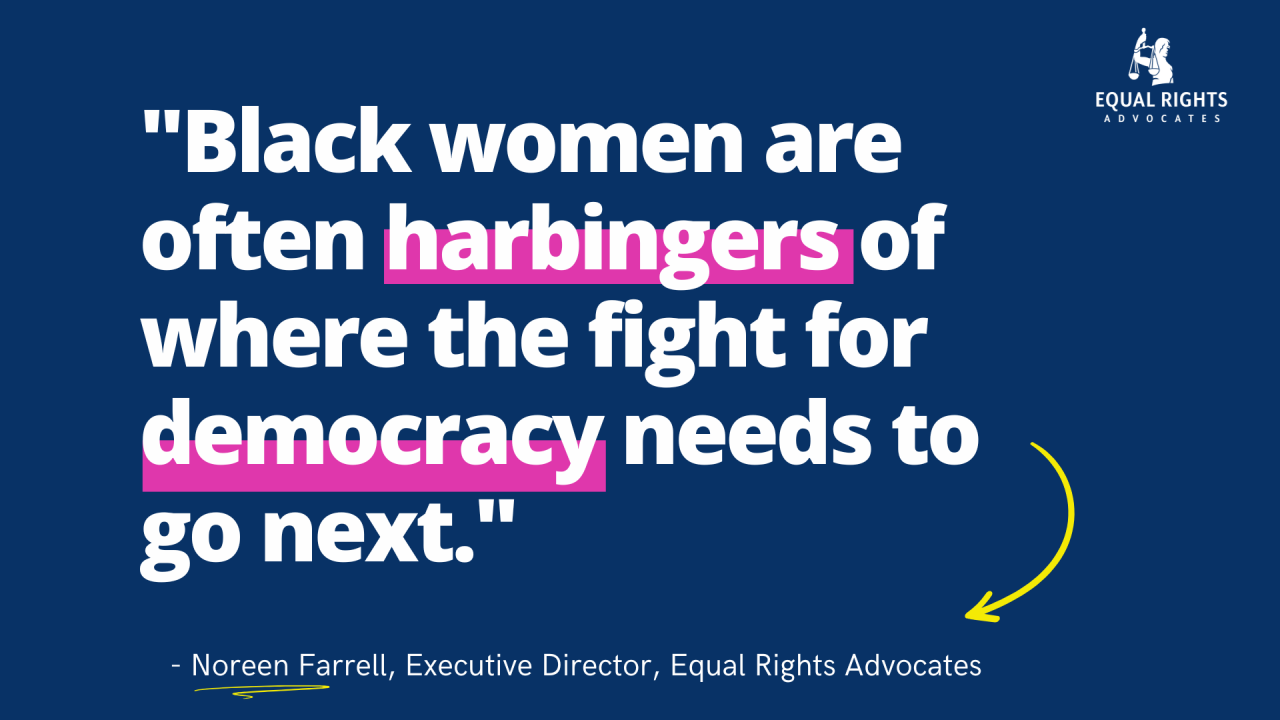
This isn’t about choosing one group of women over another. This is about understanding that Black women are often harbingers of where the fight for democracy needs to go next. When Black women created the #SayHerName campaign to bring awareness to overlooked police murders of Black women in the Black Lives Matter movement, that mobilization is the tree from which our efforts to memorialize Renee Good and Alex Pretti and understand the circumstances of their deaths stem. In other words, because of Black women’s activism against racialized state violence at the hands of law enforcement, we have the language and the political lens through which to see their killings at the hands of ICE.
And why do we even know about the abuses being perpetuated by ICE? In part because of Black women journalists like Georgia Fort, who was arrested recently, simply for exercising her first amendment rights as a reporter.
The solution? Abolish ICE. Allow journalists to do their jobs. Stop tearing families apart. Stand tall against white supremacy.
So when someone asks why we focus on Black women, the answer is simple: Because they warned us. Because they lead us. Because that’s what intersectional solidarity looks like. Because we all rise together, or we don’t rise at all.
This Black History Month, let’s move beyond recognition to action. Listen to Black women. Amplify their analysis — not merely their challenges. Oppose white supremacy in all its forms.
Our fragile democracy depends on it.
Learn what your rights are so you can navigate your situation and make the best decision for you.
Aprende sus derechos para que puedas navegar su situación y tomar la mejor decisión para ti.